Grammar Girls Grind: The School Comedy Where Diversity Needs No Explanation
Writer-director Bonnie McGhee and the cast of Grammar Girls Grind discuss awkward Black girlhood, a production made up almost entirely of women and non-binary people, and why making the show was only half the battle.
I meet with the amazing women behind Grammar Girls Grind at Honest Greens in Soho. While introductions compete with the music, I eventually catch everyone’s names: Ruby Layla Redford plays Gwen, Aiyana Bartlett is Bea, Ruva Jasi is Willow and Tabitha Crocker plays Carmen. At the centre of it all is Bonnie McGhee, writer, creator, director, producer and, according to the cast, occasional chef. In other words, the mastermind behind the entire Grammar Girls Grind universe.
The five-part web series follows four girls at a grammar school on the brink of becoming co-educational. It is a familiar setting, following in the footsteps of British school comedies such as Derry Girls and The Inbetweeners, but populated by characters who feel far less familiar on British television: awkward Black girls, spiritually eccentric brown girls, queer teenagers and mixed-race girls allowed to be complicated without becoming a contrived lesson in diversity.
McGhee began with the oldest piece of writing advice there is: “write what you know.” She went to grammar school herself, but she was also conscious of advice she received when entering television: if you want to take a creative risk, “you should only ever take a small step.” “Don’t be making shows with all Black people in it,” she remembers being told. “You will never get that greenlit.”
Grammar school therefore became the recognisable structure; the “small step” was allowing its diversity to appear on screen as naturally as McGhee had experienced it. Yet what feels ordinary within the show becomes strangely difficult to place within an industry that often understands diversity through rigid categories.
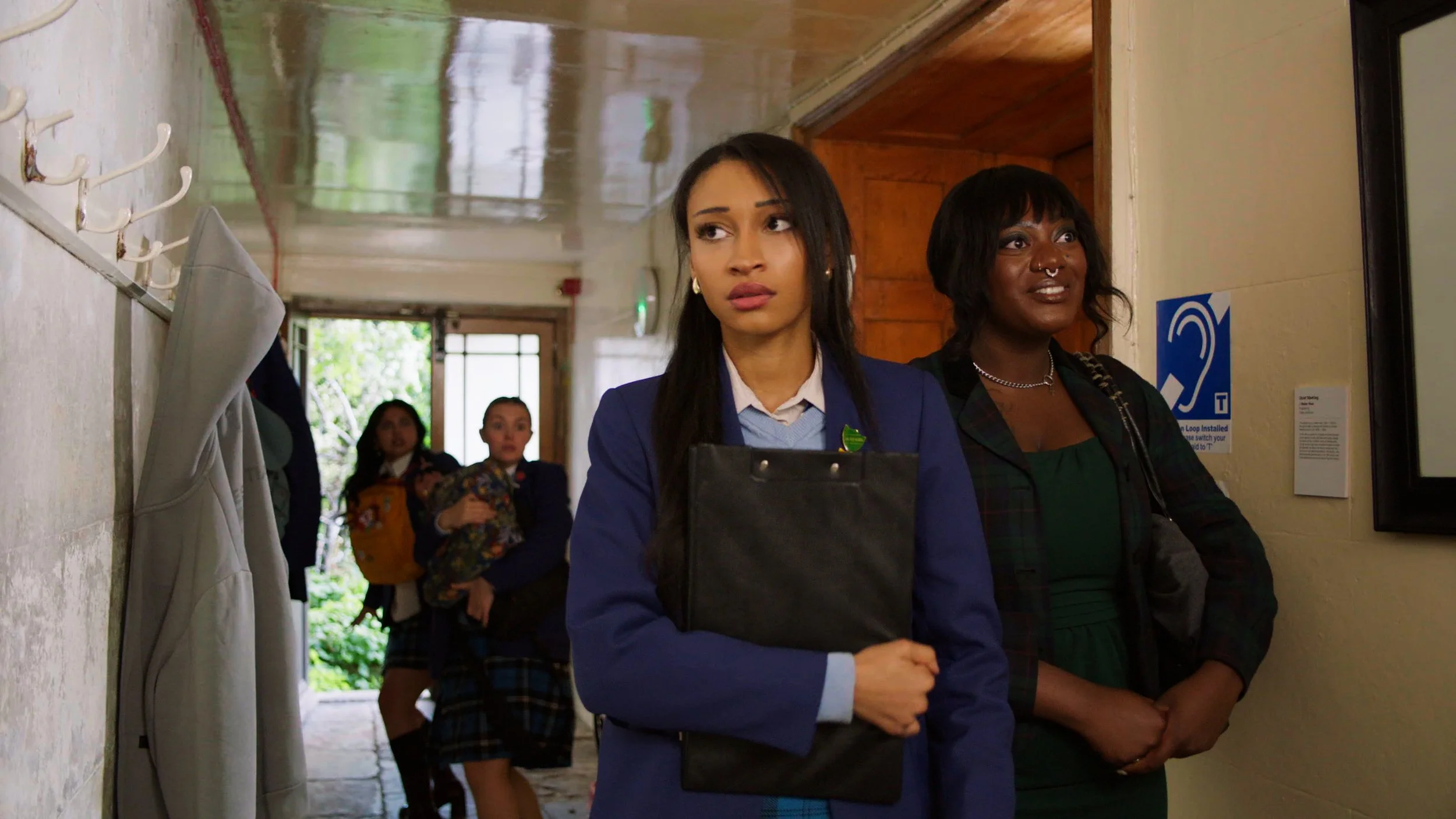
Anyone who has been to grammar school will immediately recognise its particular ecosystem: the pressure, the precociousness and the urge to appear far more certain of yourself than any teenager really is. Crocker found something comforting in returning to a school sitcom, saying the project allowed her to “relive what [she] used to watch” when she was younger.
For the rest of the cast, familiarity came through the girls themselves.
Redford describes Gwen as possessing a “snobbish type of arrogance”, but sees that performance of confidence as an attempt to prove herself to herself. Gwen is pretty, mixed-race and mean-girl adjacent. Redford, however, connects her behaviour to something she saw “a lot in other mixed girls growing up”, which she calls “the mixed girl complex”: the pressure to act in a particular way to secure acceptance from one group or another.
Redford also recognised it in herself at around sixteen. She explains that mixed-race girls can feel they need to “put themselves in this position” where nobody can accuse them of being “not Black enough or not white enough”. Gwen would rather decide how she is seen than leave that decision to somebody else.
Bartlett found a different route into Bea. McGhee originally wrote the character as a wealthy, dark-skinned Black girl. “I’m not that,” Bartlett says, rather conclusively. Instead of pretending the difference did not exist, she brought more of herself into the role. Growing up in a household influenced by both Catholicism and Hinduism, with grandparents more religious than her parents, she decided to “amp up” Bea’s spirituality at the audition until it bordered on the ridiculous.
Bartlett compares Bea’s exaggerated spirituality to that of a “performative white woman”, although drawn from her own experiences of Hinduism. Bea gets to inhabit that same over-the-top spiritual archetype without the need for cultural exposition. It is simply another facet of her personality, rather than something the show frames primarily through her ethnicity.
Jasi was excited to play Willow for an even simpler reason: “she is an awkward Black girl.” She points to Michaela Coel’s Chewing Gum and Issa Rae’s Insecure as formative viewing. Willow offered the chance to contribute something “fun and different” from the roles Black women are generally expected to occupy.
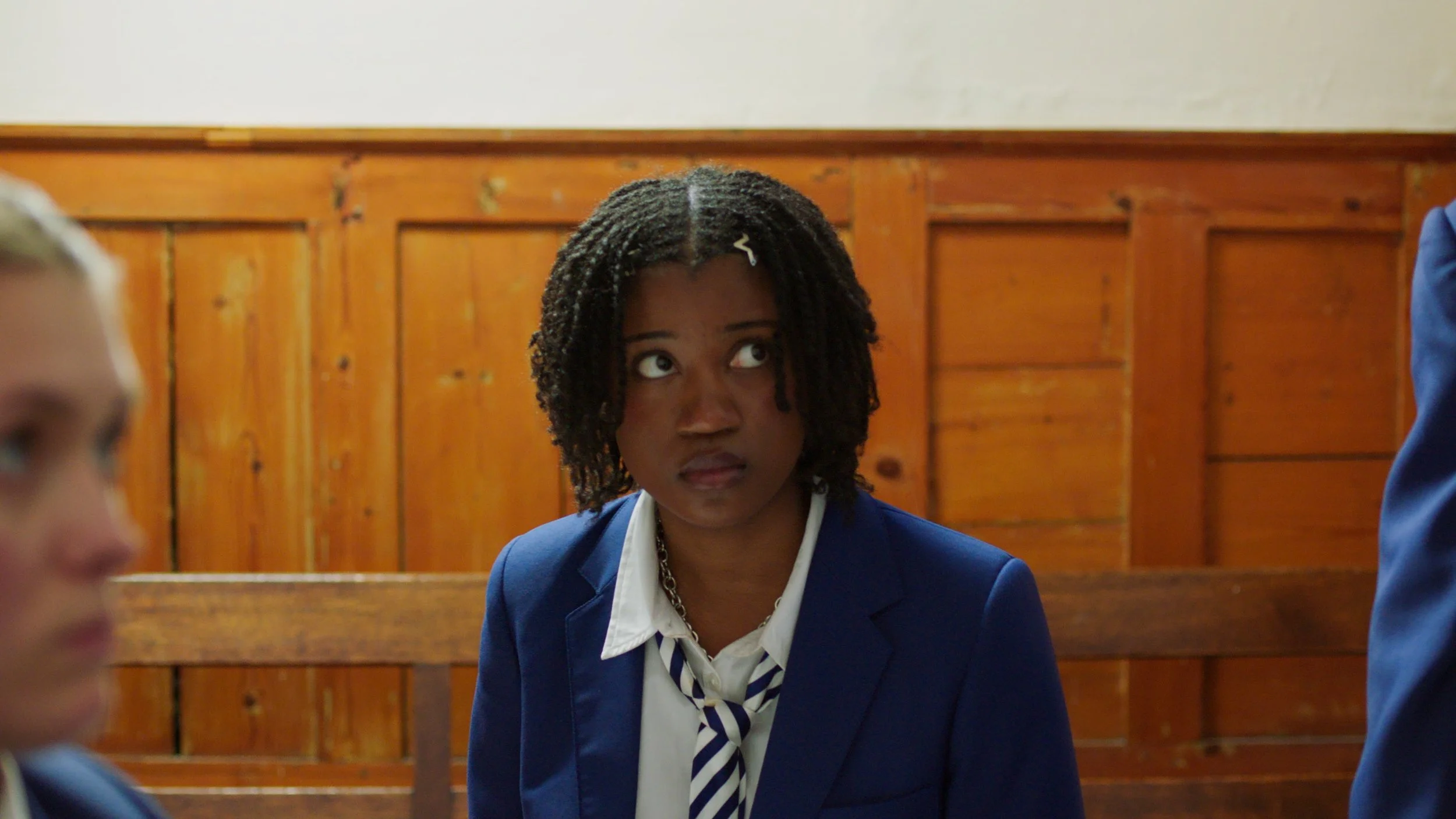
Having attended a predominantly white secondary school herself, Jasi understood Willow’s feeling of being “the odd one out,” and the difficult balance of resisting other people’s stereotypes without betraying herself in the process.
Halfway through discussing all of this, the music becomes impossible to ignore. We move tables, only to realise we have placed ourselves even closer to the speaker, and have to move again. Between moving tables and talking over the music, McGhee’s description of the production as “just girlhood” begins to make sense.
When I mention the women-dominated production, the group answers with a collective “yes.” Of a crew of around 27, McGhee says 25 were women or non-binary people and two were men. “Not that I would see a man and be like, ‘Get away,’” she clarifies. She simply became more specific when recruiting: “We are looking for women.”
McGhee did not attend film school and began without the ready-made network that often comes with it. After a year working in television, she says she had never been on a set with more than eight women, all of whom were white. On Grammar Girls Grind, “there was lots of patience and empathy.”
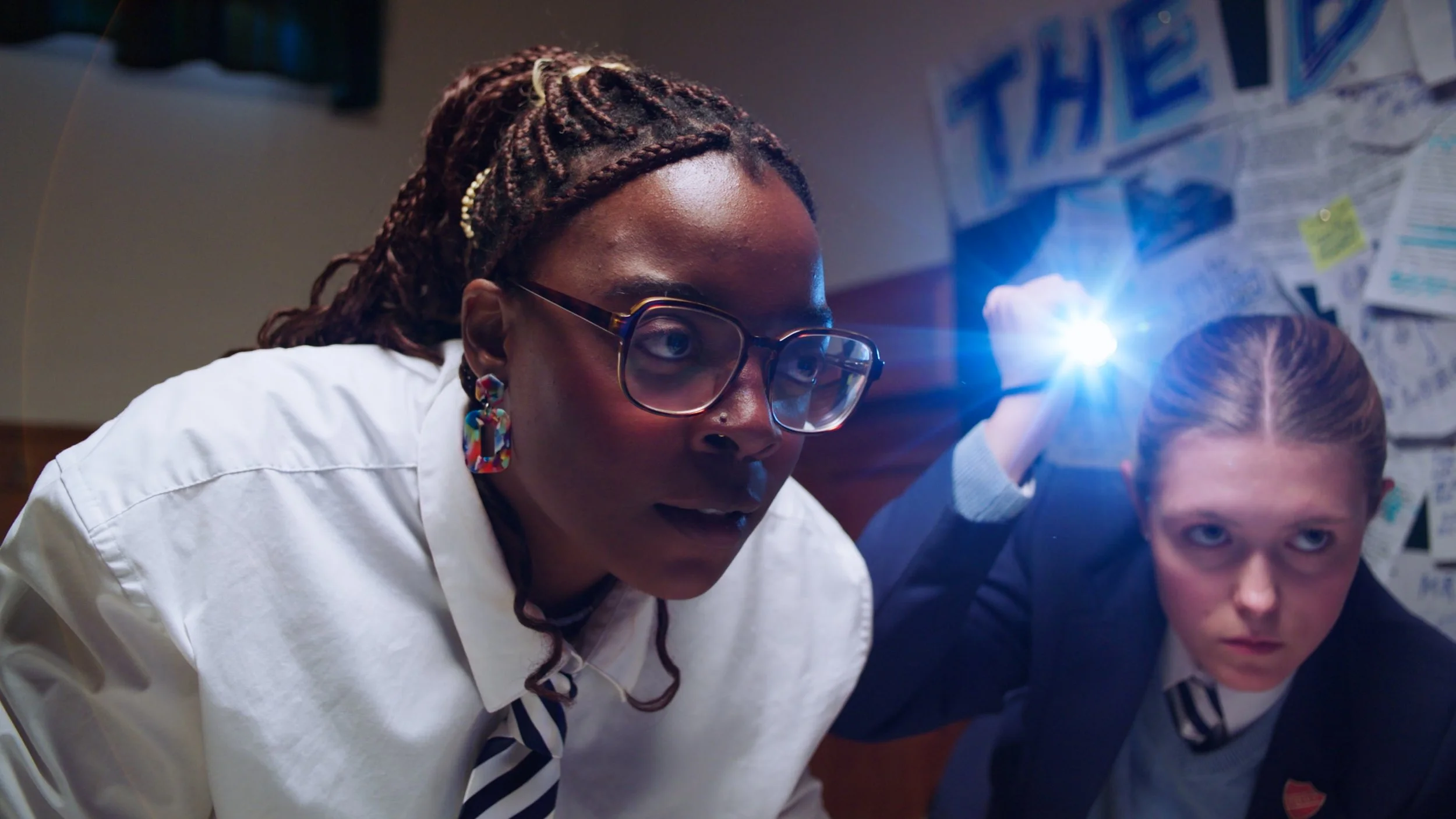
Patience was the operative word during a shoot in which the team filmed all five episodes in just eight days following roughly three months of pre-production. “I thought, let’s recreate that grammar-school pain,” McGhee jokingly says. “It was really intense,” she admits. She has forgotten much of the shoot. “Trauma?” Redford offers. “Self-inflicted trauma,” McGhee corrects.
Still, the cast remember the care inside it. Crocker recalls needing to cry to “reset her emotions,” and McGhee finding her and allowing her the moment she needed. “Bonnie did everything,” the cast insist: listing director, producer and even chef. Everyone laughs at the last title with the intimacy of an inside joke they are not going to explain to me.
If filming was intense, post-production proved even more difficult. McGhee wrote the series in around a month. “Looking back, I probably could have done with a few more drafts,” she says, but post-production took far longer than anticipated.
Grammar Girls Grind was entirely self-funded by McGhee, and its original premise involved far more of the boys entering the previously all-girls school. That meant additional actors, extras, locations and licences. The co-educational upheaval may be the core of the concept, but the practical cost of showing it forced McGhee to craft a different version of the story.
This all-important money issue resurfaces when I ask about a second season. The cast are immediately enthusiastic; McGhee’s response is closer to a sigh. The current series is a proof of concept, made in the hope that a production company might develop it into a long-form sitcom. Continuing independently in the same way would be much harder. When Jasi asks why they cannot simply do it again, McGhee’s answer is immediate: “No money.”
She looked to creators who used the web to carve their own way into television, particularly Rae’s The Mis-Adventures of Awkward Black Girl and Adjani Salmon’s Dreaming Whilst Black. Both demonstrated what a web series could visualise to an industry that had previously overlooked its creator. Dreaming Whilst Black began online before becoming a BBC pilot and then a full television series. Rae’s web success similarly preceded Insecure. “While I wouldn’t call that the marker of success,” McGhee says, “that was, I guess, the hope.”
The comparison also reveals how much emerging writers must prove before being trusted with resources. Grammar Girls Grind occupies an awkward middle: school stories are considered familiar, while this particular version of one is treated as niche.
Redford argues that the show’s greatest strength, diversity that needs no explanation, can also be its greatest issue. Television diversity is often presented in one of two ways: through predominantly white casts with one or two minority characters, or through explicitly Black productions in which a shared racial identity is central to the story. Grammar Girls Grind does neither. Its characters are not included as tokens, but it is not an all-Black show either.
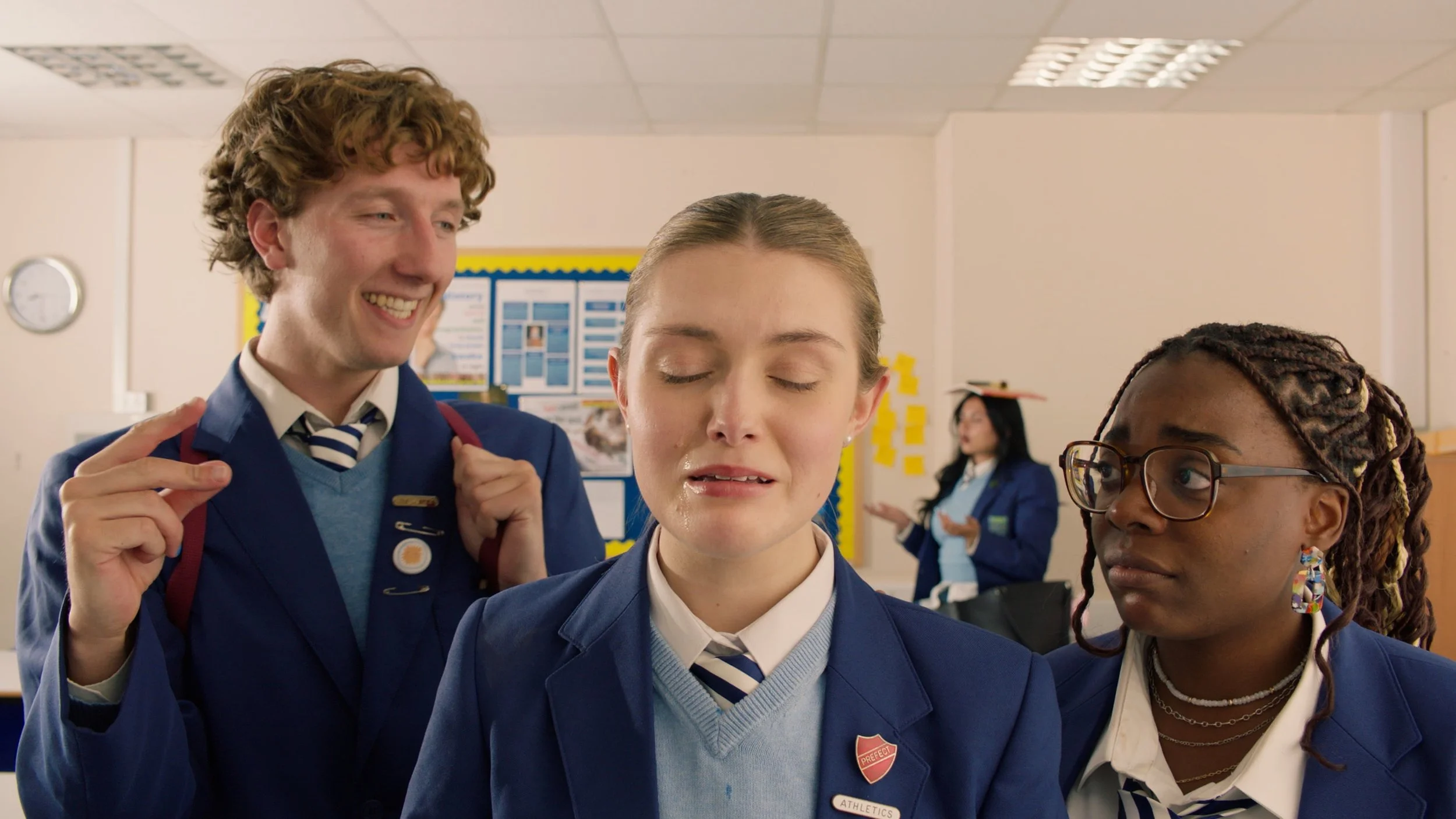
This leaves the series in a difficult position when it comes to funding. Some organisations are uninterested in diversity, Redford says, while initiatives supporting Black creatives may understandably prioritise entirely Black casts or teams. Its world instead resembles her own South London friendship group: Black, Asian, white and mixed-race people existing together without needing to justify their proximity.
“If we only have Black shows and we only have white shows, there’s no normalisation,” she says. Dedicated funding has created vital opportunities, but she questions whether the categories can sometimes reproduce the separation they are trying to correct.
McGhee recognises the problem personally. As a mixed-race woman with one white parent, she is conscious of the privilege colourism affords her, yet frustrated by a system that asks projects to present identity in a form institutions already recognise. She calls it, with some embarrassment, “a bit slam-poetry: too Black for the white, too white for the Black.” The queer characters present a similar challenge. As Crocker puts it, LGBTQ+ people are rarely permitted to “just be”; their pain and struggle must be served up before their presence is considered meaningful.
There is no shortage of material for a longer series. McGhee has imagined an episode about the Duke of Edinburgh’s Award, and another in which the set texts everyone remembers studying in English class begin to come alive. For now, however, she is taking a break. She is part of the Soho Writers’ Lab and wants to explore stories about adult life. “God forbid I have to grow up,” she jokes.
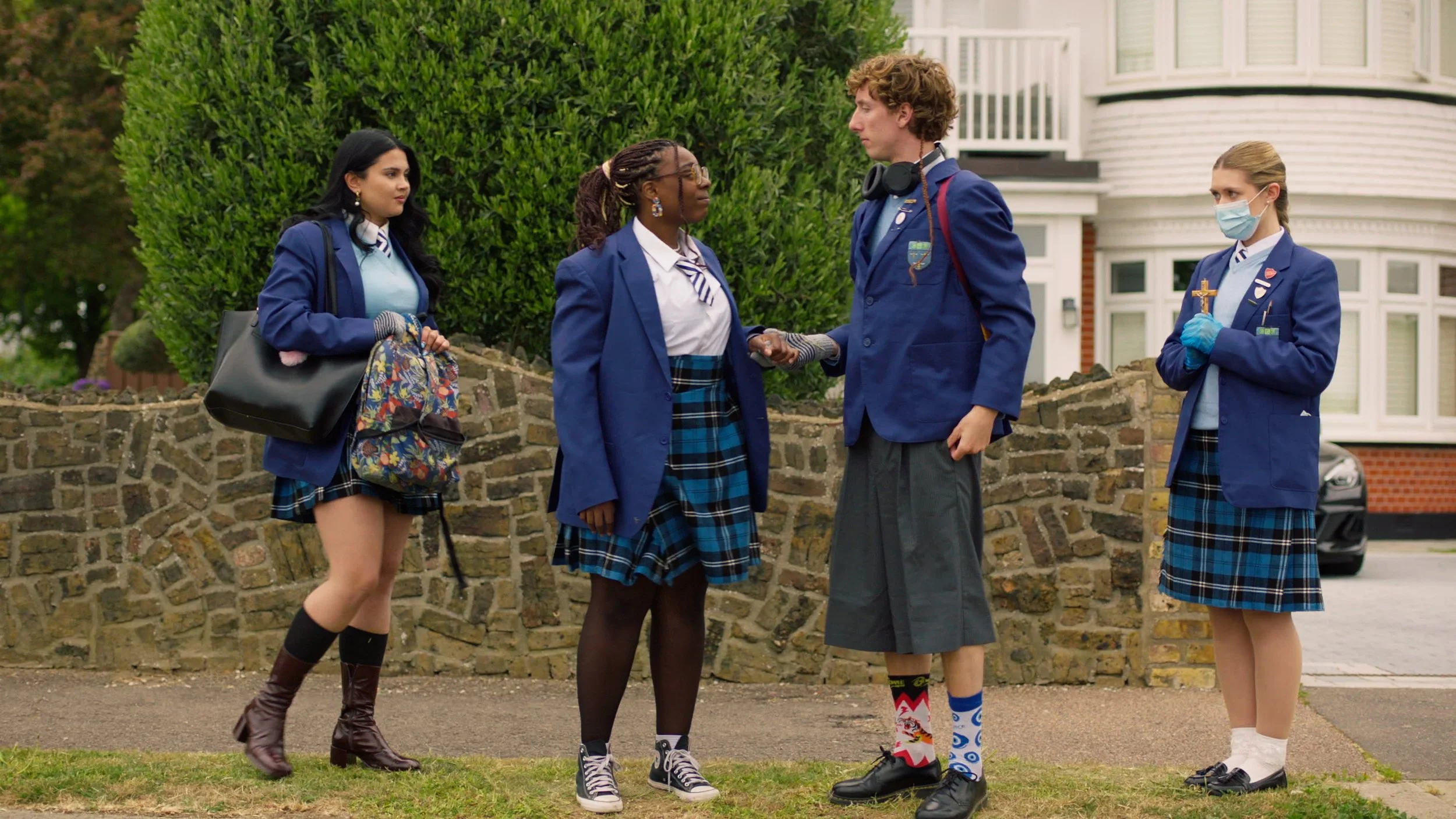
Before we finish, I ask the cast which girl they really are, BuzzFeed quiz-style. Redford reluctantly admits, “I’m Gwen through and through,” minus the meanness. She remembers forcing herself, aged twelve, to drink black coffee three times a day for six months because she wanted to seem like an adult. She now loves it. Everyone agrees this is an extremely Gwen thing to do.
Bartlett sees herself in all four girls but gravitates towards Carmen, with occasional Bea, Willow and Gwen personas. Jasi is decisively a Willow. McGhee, having written them, considers each character a different corner of her brain, although she is certain she is not Bea. Crocker identifies with Carmen’s stress levels, but otherwise feels “very Willow,” while admitting there is probably a little Gwen in everyone.
That may be why Grammar Girls Grind works. Its characters are recognisable types without being trapped by them. They are awkward, arrogant, spiritual, stressed, Black, white, brown, mixed-race and queer, but none of those descriptions complete the person.
The future of the series remains uncertain, but its five episodes make a convincing case for why we should see more of Gwen, Bea, Willow and Carmen. Hopefully, as McGhee says, “it’s not the end.”
Watch all five episodes of Grammar Girls Grind on Bonnie McGhee’s YouTube channel, and follow @grammargirlsgrind on Instagram for updates.