Space is the Place: What Can Black Britain Learn from Sun Ra?
Slugs jazz club, New York City, on a Monday night sometime between 1966 and 1971. A man takes to the stage, dressed in glistening robes of many colours and carrying in each hand a giant wooden hook. He walks purposely towards a drum - a drum so tall that he has to stand on a box to play it - and begins to beat a rhythm with the hooks, gradually increasing in speed, threatening to become a cascade of sound before slowing down again. Other shapes appear out of the darkness behind him, similarly attired in elaborate robes and headgear, and soon they are playing drums too, following the rhythm of the larger drum. The sound has become a stampede, and now dancers, male and female, appear at the front of the stage, skipping, bending, writhing and twirling in time to the ancient rhythms. Suddenly the drums are gone, replaced with horns - saxophones, trumpets, trombones, bassoons, bass clarinets - and a cacophony of sound emerges, tied together by a system stretching far beyond conventional music theory. The chaos builds and builds, finally reaches a crescendo and then abruptly stops. From the void, a female voice rings out melodica: “when the world was in darkness, and darkness was ignorance, along came Ra/When the world was in darkness, and darkness was ignorance, along came Ra/The living myth! The living myth! The living mystery…” The entire band has now joined in with this incantation, and now, from the side of the stage, a man emerges, dressed like some kind of space age pharaoh. He is round like a planet, and like a planet he seems to have his own gravitational pull. The eyes of everyone onstage are now focused on him, awaiting instruction. This is Sun Ra, and the band is his Arkestra.
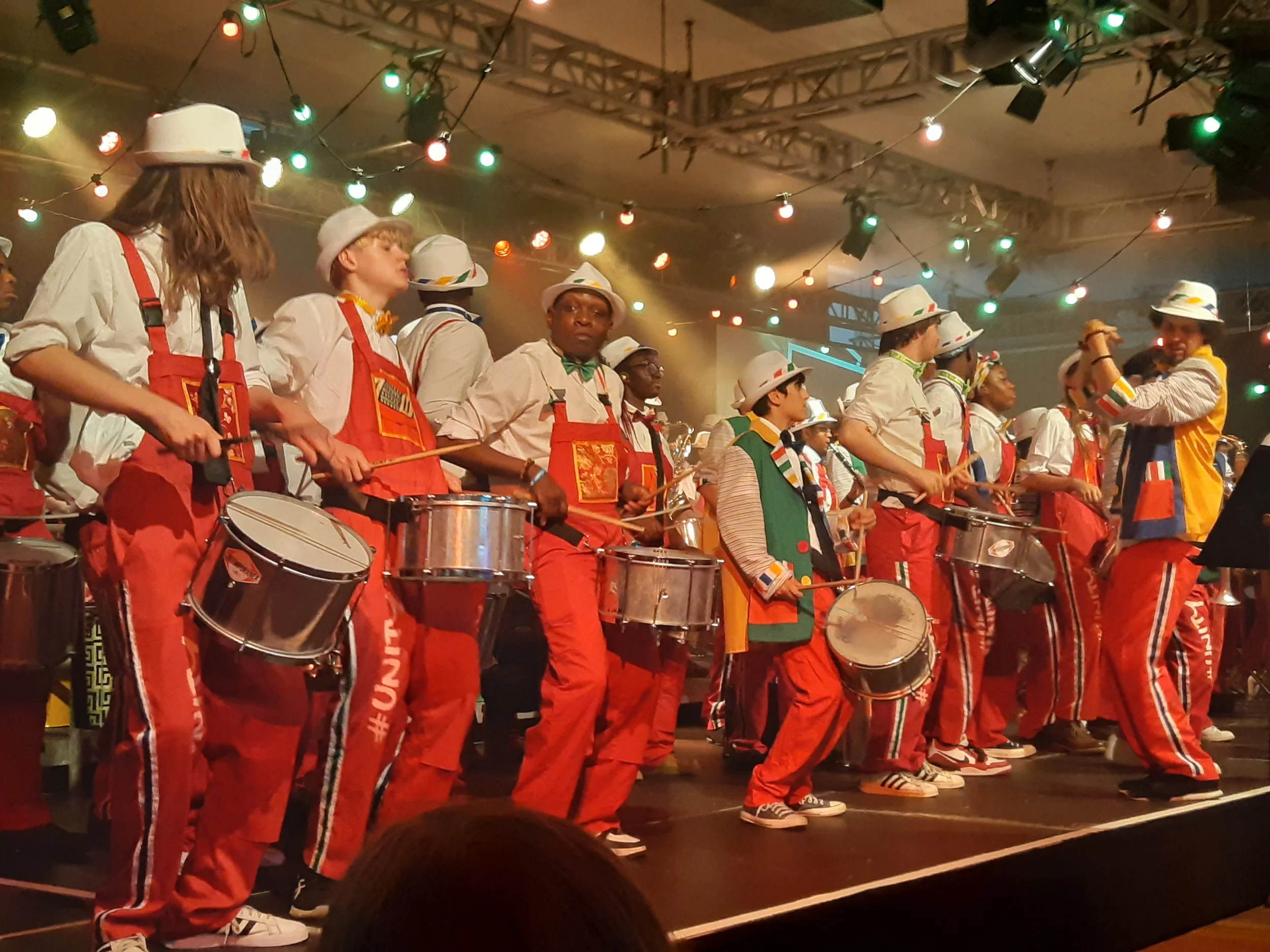
Sixty decades later, a similarly colourful band takes the stage at London’s Southbank Centre. This band is composed of over 150 young people between the ages of 14 and 25, dressed in bright outfits and armed with a variety of instruments: steel pans, drums, saxophones, trumpets, trombones, tubas. When everyone plays, individual instruments disappear within a tidal wave of sound, while brightly dressed dancers give visual form to the music. The drums combine with the baritone saxophones and tubas to create an earth-shaking rhythm section, while the higher melodic tones of the steel pans, trumpets, tenors and altos glide nimbly above them, dipping, diving, and intertwining like sparrows. Popular songs are transformed and expanded upon, their familiar melodies appearing and disappearing from within the maelstrom of sound. This band is Kinetica Bloco, the brainchild of the late Mat Fox, a Manchester-born musician who worked as the head of instrumental music at St Gabriel’s College in south London.
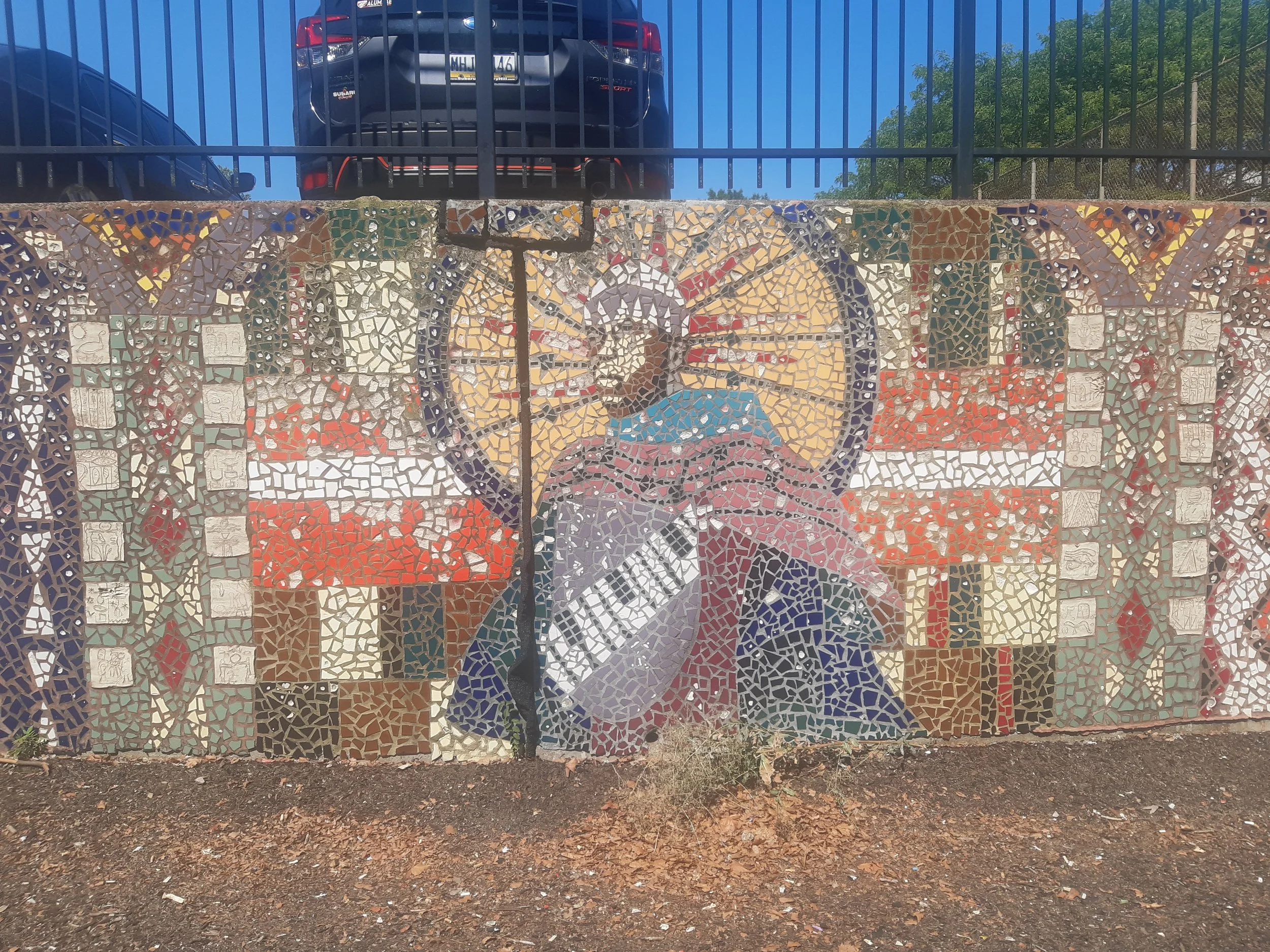
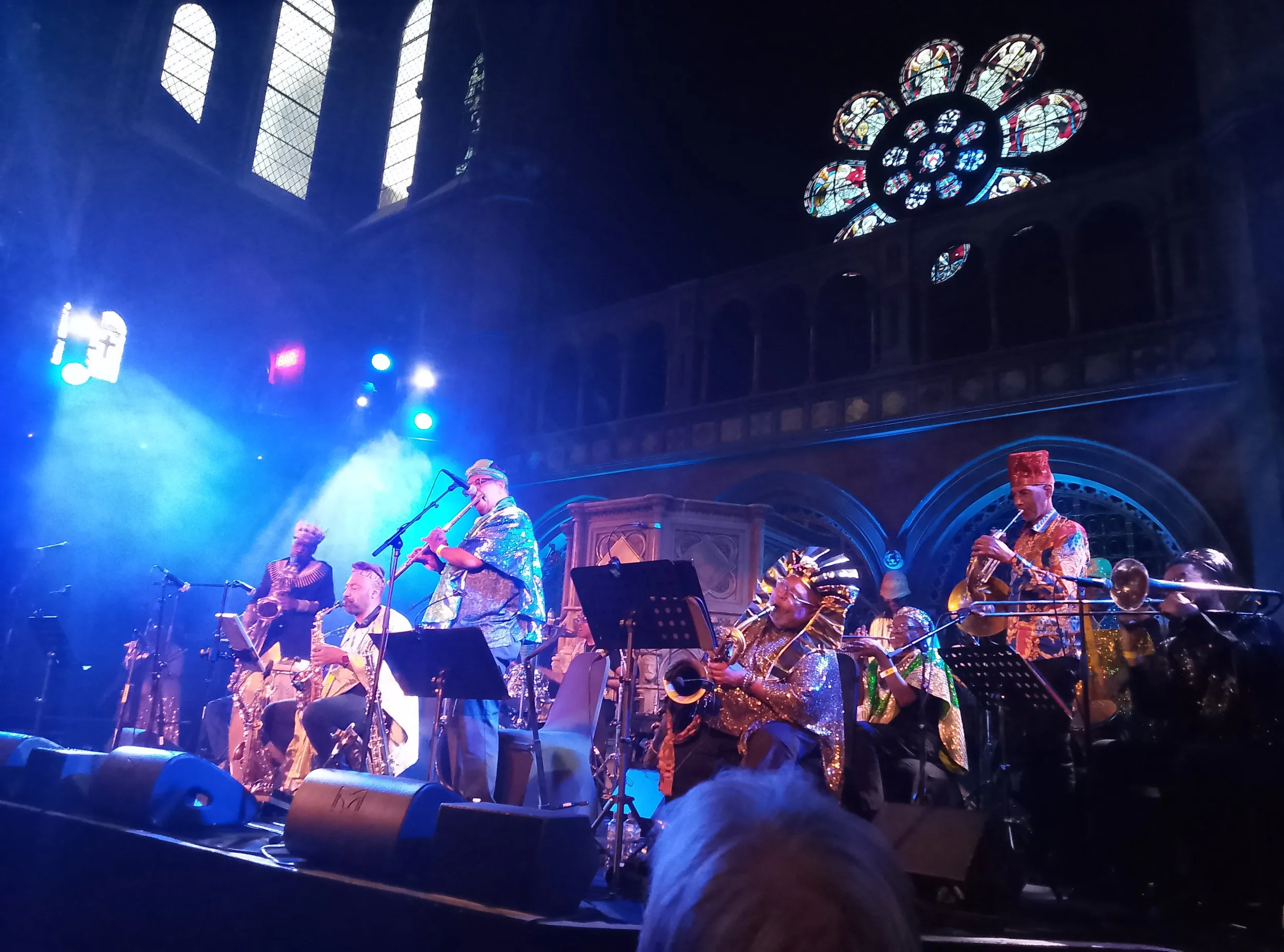
What connects an avant-garde jazz band from mid-20th Century America to a South London youth group in 2026? The connecting thread is purpose: The Sun Ra Arkestra was formed during the tumultuous years of the Civil Rights movement, and continued into the era of Black Power and beyond. One of its primary initial functions, as described by Sun Ra biographer John Szwed in his book Space is the Place: The Lives and Times of Sun Ra, was to offer “a haven against the chaos of New York and the sixties” (p.195) for young Black men who might otherwise have struggled to find community in the harsh landscape of post-war America. One longtime band member, Eloe Omoe, had been a Chicago gang member before being recruited into the army-like environment of the Arkestra, where band members lived together in a drug and alcohol-free house, and were often woken in the early hours to join marathon, drill-like rehearsals. “I look for the incorrigibles,” Szwed quotes Sun Ra as saying of how he selected musicians (p.221). In a recent interview, modern-day Arkestra leader Marshall Allen - who joined the band in the late ‘50s and is now almost 102 years-old - said he would have been “lost” without Sun Ra’s intervention in his life.
Kinetica Bloco might not be looking for “incorrigibles”, but, like the Sun Ra Arkestra of the Civil Rights/Black Power Era, it does serve as a safe harbour of sorts for a group of people who are in danger of losing access to a sense of community. In 2024, UNISON reported that a staggering 1,243 council-run youth centres had closed their doors between 2010 and 2023, leaving “teenagers without guidance and positive mentors, as well as taking away social hubs where young people can gather.” The absence of youth clubs, the report goes on to say, dramatically increased the likelihood of young people becoming isolated and depressed, and vulnerable to being drawn into antisocial behaviours.
The age group that make up Bloco’s majority Black, South London-based cohort are directly in the firing line of such closures. A 2024 study by Carmen Villa noted that 30% of London’s youth hubs had closed down during the 2010, with teenagers affected performing 4% worse in high school exams and becoming 14% more likely to commit crimes. A report published by Statista in November 2025 shows that knife crime in London was concurrently on the rise, increasing every year from 2015/16 to 2019/20 and only dropping significantly during the Covid-19 lockdown, steadily climbing back to its previous levels by 2024/25. What would seem like a simple calculation - the correlation between the reduction of youth hubs and the increase in knife crime - is one that a succession of governments have failed to make, while some of the more positive developments in this area, like the Merky FC HQ in Selhurst, have been the work of community-minded private citizens.
Despite its Ancient Egyptian and Space Age trappings (Sun Ra always claimed to be from Saturn), Sun Ra’s primary inspiration for his Arkestra was the proliferation of African-American big bands that existed in America during his early adulthood in the 1930s. As a resident of heavily segregated Birmingham, Alabama, the young Sun Ra, along with many Black Americans, was mesmerised by these resplendent examples of Black unity through music: bands led by the likes of Duke Ellington, Fletcher Henderson and dozens more. Similarly, music has always acted as a form of community for Black Britons: we need only look at the Sound System culture that was born from new arrivals that had been denied entry into whites-only music venues, and the annual Notting Hill Carnival that grew from that culture. In 2024, The British Library presented ‘Beyond the Bassline: 500 Years of Black British Music’, emphasising the importance of Black music to British culture.
The Arkestra, while most famous for free-jazz freakouts, was also a repository of Black American musical styles, capable of playing everything from authentic Dixieland jazz to Duke Ellington standards. Kinetica Bloco also has a diverse repertoire - last year’s Summer Showcase performance included Roy Ayers’ ‘Everybody Love the Sunshine’, ‘Body Language’ by Ezra Collective (which itself contains two former Bloco members in Femi Koleoso and Ife Ogunjbi) and a medley of disco classics. Bloco members often progress into the more jazz-focused sister organisation Tomorrow’s Warriors; ‘graduates’ include Sheila Maurice-Gray and Richie Seivwright of Kokoroko, Nubya Garcia, and Theon Cross.
What can Black Britain learn from Sun Ra? Only something that it already knows, deep down, but may have lost track of: the importance of creating community through music, and using that community to uplift people, and to make them part of something larger than themselves. Kinetica Bloco understands this, and is doing incredible work to affect change. What needs to happen now, as Ezra Collective astutely pointed out after winning the Mercury Prize in 2023, is for funding to be made available for similar organisations to flourish outside of London. As Sun Ra himself once said, “Music is a language, and if I can get this planet to listen carefully, they will change.”